
Last updated November 16, 2026
 Sweep & inspection
 Caps & crowns
 Flue relining
 Masonry repair
 Gas fireplace service
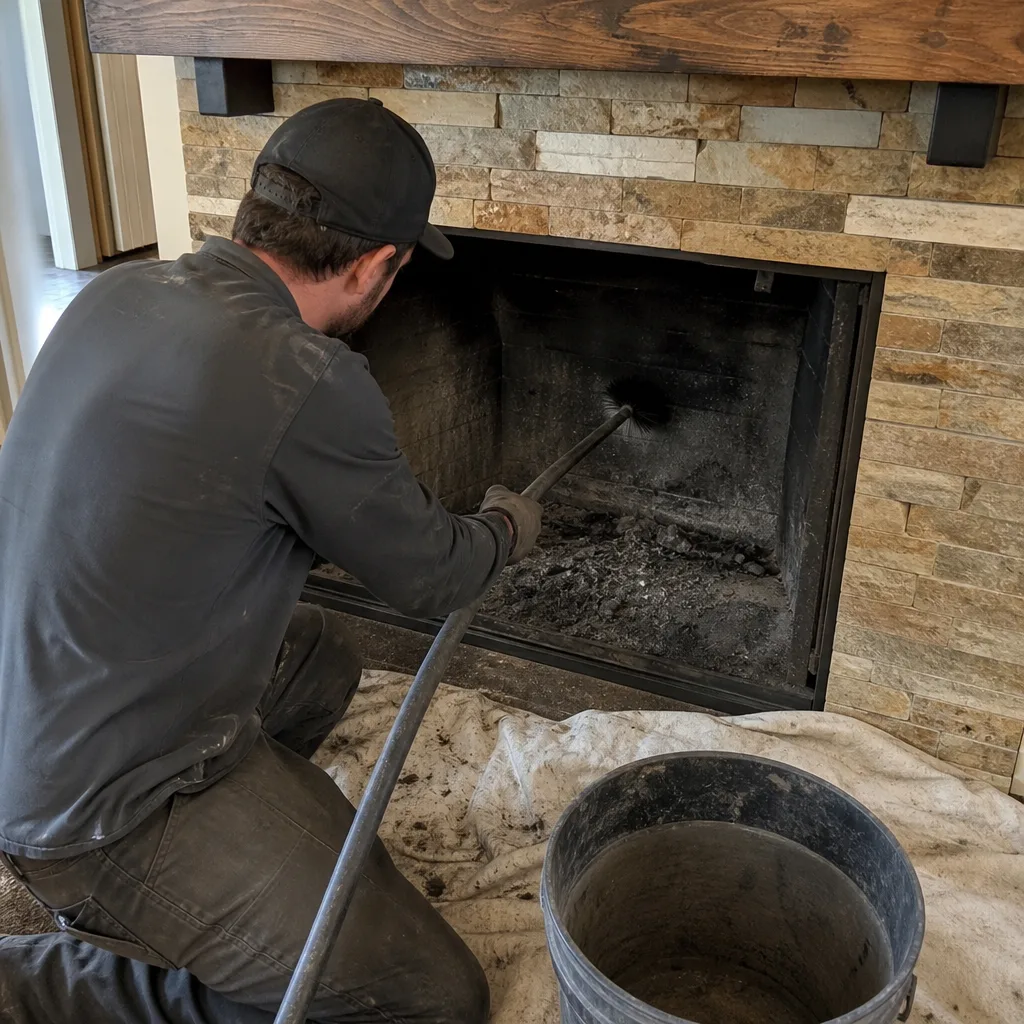
Level 1 sweep and inspection to the NFPA 211 annual standard - flue, crown, cap, and flashing checked and photographed
Chimney sweep logs do not sweep chimneys. They loosen some creosote - which then falls where a brush and vacuum still have to collect it.
Chimney Sweep Maintenance Checklist for Centennial Homeowners
The most dangerous chimney condition a Centennial homeowner can have isn’t a dirty flue. It’s a false sense of security from a checklist that told them everything looked fine when they had no way to see the flue liner. A cracked clay tile or a gap behind a smoke chamber hides behind masonry, and no flashlight aimed up the firebox from the floor will find it. This guide is built as a decision tree, not a generic to-do list. Every item is sorted into one of two buckets: a safe self-check you can do with a flashlight from the hearth, or a job that needs a trained eye and the right tools. By the end you’ll know what to look at in Centennial, when to look at it on a Front Range calendar, and how to keep a record that holds up when an insurer or a buyer asks.
Quick Answer
A safe home chimney checklist has two halves. The homeowner half is visual: firebox walls, damper movement, smoke stains, cap condition, and water intrusion, all checked from the hearth with a flashlight and photographed. The professional half is annual sweeping plus a Level 1 inspection, and it’s the only way to actually assess the flue liner, which you cannot see from below. In Centennial’s freeze-thaw climate, do the homeowner half in early fall before frost and again in spring, and book the professional sweep before the first burn of the season.
Styles & brands we work with
- Sweep & inspection
- Caps & crowns
- Flue relining
- Masonry repair
- Gas fireplace service
Table of Contents
- Your Checklist Is a Decision Tree, Not a To-Do List
- Homeowner-Safe Visual Checks (and the Red Flags to Photograph)
- Cosmetic Wear vs. Structural Compromise in Centennial’s Freeze-Thaw Climate
- The Centennial Seasonal Timing Framework
- Checklist Items That Always Require a Professional
- How to Build a Defensible Maintenance Record
- What Becomes a Disclosure Under Colorado Real Estate Rules
- Common Mistakes to Avoid
Your Checklist Is a Decision Tree, Not a To-Do List
Most maintenance lists fail because they mix actions nobody should attempt with chores that are perfectly safe. A homeowner reads “inspect the chimney liner” alongside “check the smoke detector batteries” and assumes they carry the same risk and the same gear. They don’t. The liner is behind masonry or a steel shell. The only honest way to see it is with a chimney camera run from the top or the firebox, and that’s a professional’s job.
So think in two buckets. Bucket one holds the observations you can make standing in your living room: how the damper moves, whether the firebox brick has spalled, where a water stain has appeared, whether the cap looks intact. Bucket two holds everything that requires reaching the flue, the crown, the top of the stack, or the interior of the smoke chamber. Your self-checks tell you when to call and what to describe. They do not replace the call.
Here’s why the distinction matters. When you photograph a red flag and hand it to the technician, you’ve turned a vague worry into a specific question. “My damper is stiff and there’s a rust streak below it” gets an answer. “I think something’s wrong” gets a shrug. If you’re in the early stages of figuring out whether you need a first visit at all, start with our chimney sweep page, which walks through what a proper sweep and inspection actually involves.
Keep the decision tree in your head like this: observe what you can reach, photograph anything that changes, and let a trained professional answer the question your flashlight can’t. Our technicians have up to 13 years of experience reading those symptoms in the field, and they’ll tell you plainly when the next scheduled service is enough and when an appointment should come sooner.
Homeowner-Safe Visual Checks (and the Red Flags to Photograph)
You can gather real information from the hearth without touching the inside of the flue. Bring a bright flashlight, a phone for photos, and nothing else. Work through this list before each burn season and after any long idle period.
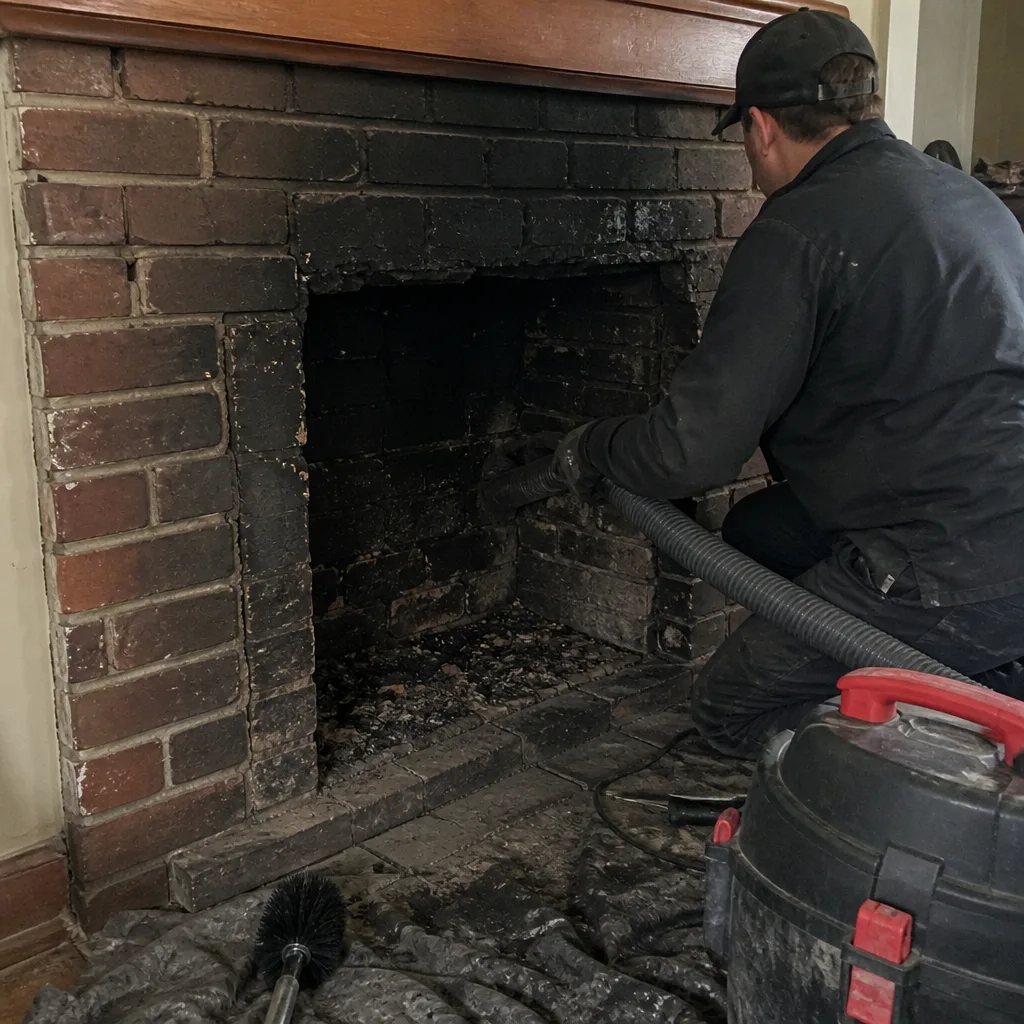
- Firebox walls. Look at the brick and the mortar joints. Fine surface spiderwebbing is normal. What matters is any brick that has come loose, any chunk of mortar that has fallen to the floor, and any crack you can fit a coin into. Photograph each one with your phone resting on the hearth for scale.
- Damper. Open and close it slowly. It should move without grinding or jamming. Rust streaks or a flaky white residue below the damper suggest moisture is getting in from above. Note it.
- Smoke chamber. Shine the light up past the damper. You’re looking for heavy creosote buildup (a dark, shiny, tar-like glaze), fallen mortar, or a lip where the smoke shelf has cracked. A smoky smell in the room when the fireplace is cold is another red flag to report.
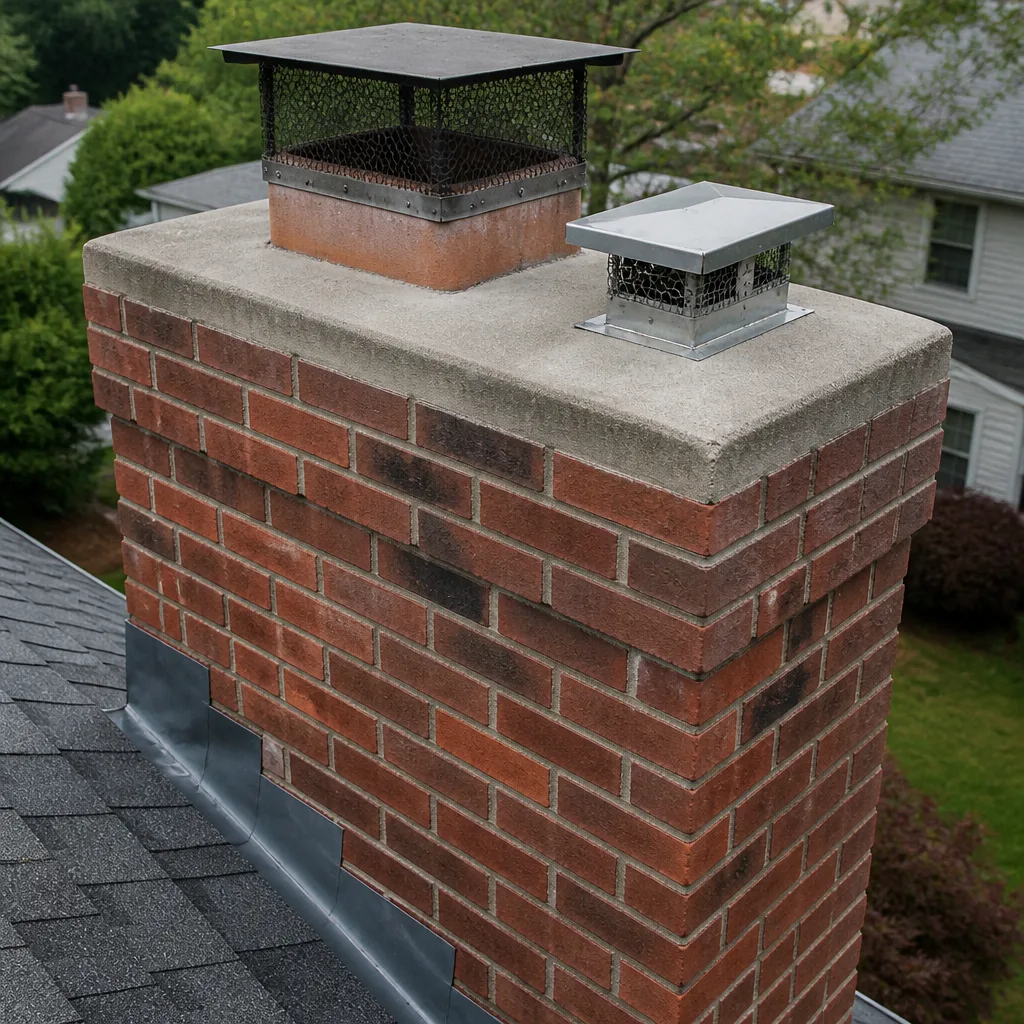
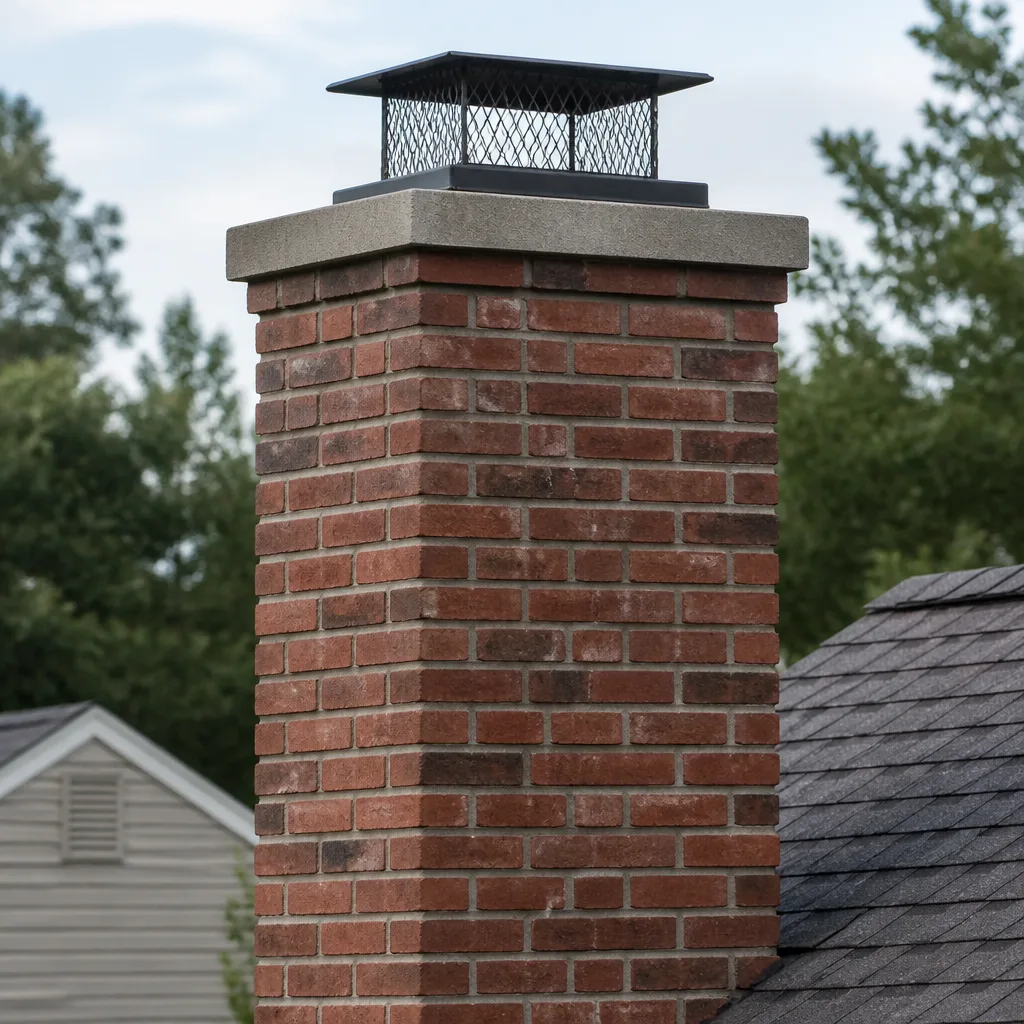
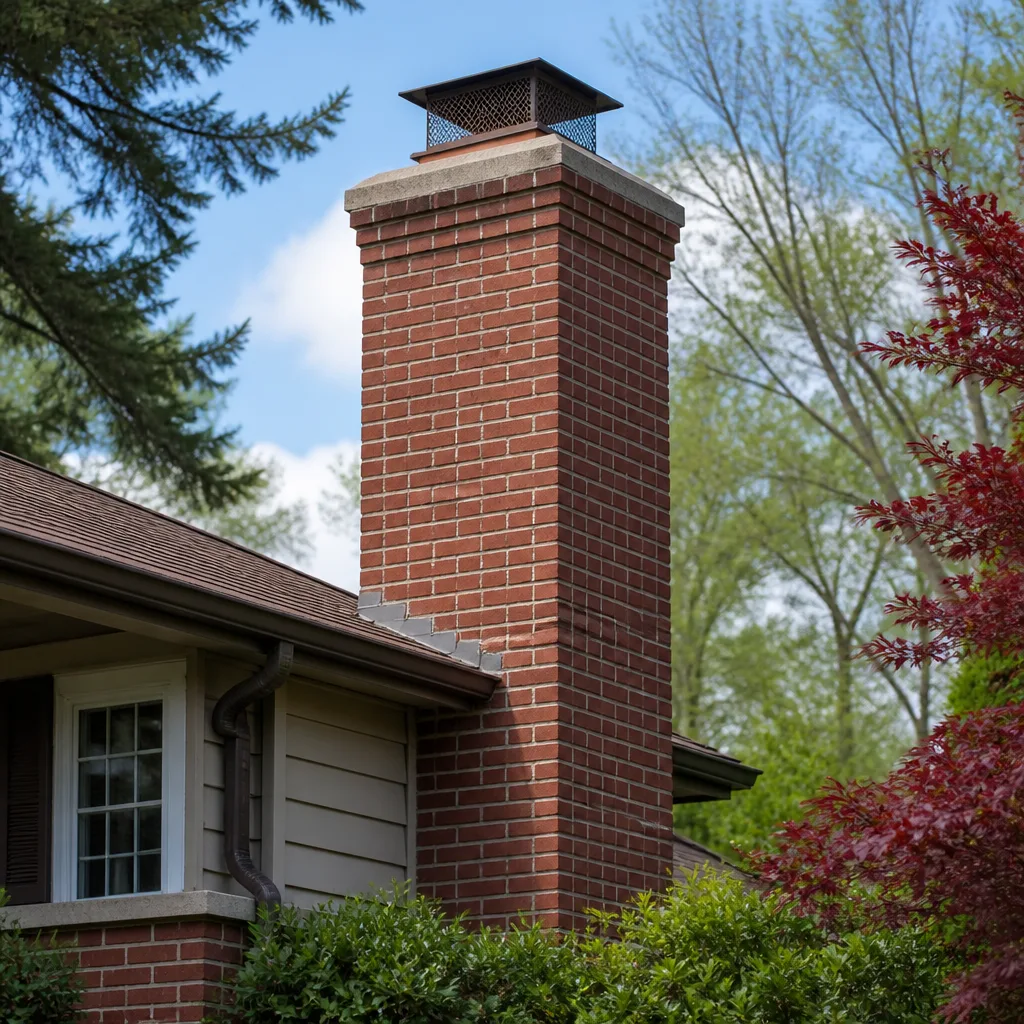
- Cap and crown, from the ground. Stand back with binoculars or a phone zoom. Is the cap still sitting square? Any visible gap where it should meet the stack? Any crown cracks? You’re not climbing up. You’re documenting what’s visible from a safe distance.
- Interior water signs. Stains on the ceiling or wall near the chimney chase, a dark streak on the face of the masonry, or mineral crust on the firebox floor all point to water entering the system.
- Wood storage and clearance. Keep firewood off the hearth and away from the firebox opening. This is a stick-and-burn-no-more check, but a real one.
Every item you photograph gets a date in the photo caption and a one-line note about what you saw. When a professional comes out, those photos turn a two-hour diagnostic into a focused one. That’s the point of a self-check: not to diagnose, but to report.
Cosmetic Wear vs. Structural Compromise in Centennial’s Freeze-Thaw Climate
Centennial sits along the Front Range, where winter brings repeated freeze-thaw cycles: a mild afternoon softens snowmelt, then a cold night refreezes it. Water that has worked its way into brick, mortar, or the crown expands when it freezes and splits the material from the inside. That cycle, not age alone, is what wears chimneys here. Understanding it is how you tell cosmetic wear from real trouble.
Usually cosmetic:
- Fine, hairline cracks in the firebox firebrick with no displacement
- Efflorescence. That’s the white, powdery salt staining on brick. It means moisture is passing through, which is worth watching, but it’s not yet damage on its own.
- Faded or chalky paint on a metal cap
- Surface rust on a damper pull
Structural until proven otherwise:
- Spalled brick. A brick whose face has popped off in a chunk is already failing; the freeze has done its work.
- Stepped or displaced cracks in the crown, or a crown that has visibly separated from the stack
- A leaning or shifted cap, which often means the top of the flue is compromised
- Cracks in the firebox wider than a hairline or any brick that rocks when you press it
- Debris in the firebox after a rain, which can signal a missing or open flue
Here’s the honest part: efflorescence is a moisture signal you can’t fully diagnose from below. Water coming through means the crown, the cap, the flashing, or the liner could be letting it in, and each has a different fix. That’s the point at which a trained professional runs a camera and tells you which one it is, so you don’t pay for a crown repair when the real problem is a cap that’s no longer sealing. When the fix is structural, the repair scope is laid out on our chimney repair page. When it’s the liner, HeatShield resurfacing or a DuraFlex flexible liner are the two systems we work with to bring it back to a sound condition.
The Centennial Seasonal Timing Framework
Generic advice says “sweep in the fall.” That’s too thin for a Front Range calendar. The right framework has four checkpoints, each tied to what the weather and your fire use are actually doing.
- Early fall (before the first frost). Do your homeowner visual checks now. Book the professional sweep and Level 1 inspection before the first cold night, not after. This is when the season’s creosote layer from last winter is fully visible from inside the flue and when scheduling is easiest.
- First cold snap. The night before your first burn of the season, confirm the damper opens fully and the flue draws smoke up and out. A chimney that has sat all summer can have a bird nest or a leaf-dammed cap. If you smell smoke in the room rather than seeing it go up, don’t burn.
- Midwinter. After a hard freeze, glance at the crown and cap from the ground for new cracks or anything that’s shifted. Freeze-thaw damage often appears after a cold week, not before it. Report anything new with a photo.
- Spring (after the last burn of the season). This is the checklist’s most underused checkpoint. A spring appointment catches winter damage while the system is idle, so any repair can be done during the mild season rather than rushed before the next fall. It also clears the creosote layer before it can absorb summer moisture.
Two Centennial-specific wrinkles. First, our winters come in waves, and a mild January can tempt you to burn wet wood that smolders and lays down heavy creosote; if you burned anything other than well-seasoned wood, note it in your log. Second, spring snowmelt around the chase is the best time to catch water intrusion, because that’s when it’s most visible. In our experience, homeowners who use all four checkpoints catch more problems before they become repairs than those who stick to fall alone.
Checklist Items That Always Require a Professional
These items belong to trained hands. Each involves either the flue interior, the top of the stack, or a component where a mistake can damage the system or create a hazard.
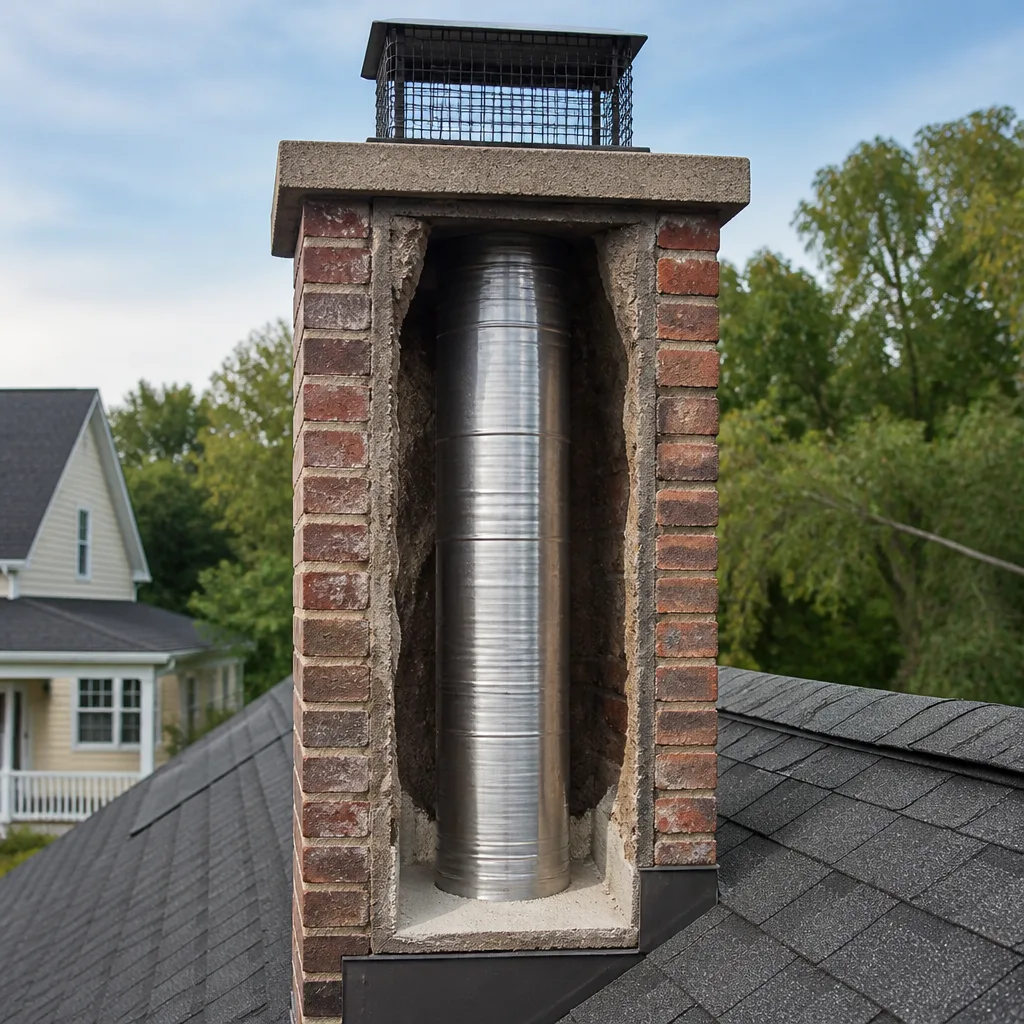
- Flue liner assessment. The liner keeps heat and combustion gases inside the chimney. You cannot see it from the firebox, and a cracked clay tile behind the smoke chamber won’t show up on a flashlight aim from the hearth. A camera inspection is the only honest read.
- Creosote removal. Creosote builds in layers, and the glazed, tar-like third-stage creosote will not come off with a brush. It needs chemical treatment and re-sweeping, and it is the fuel that turns a chimney fire from unlikely into possible. Ask a professional to assess it.
- Liner resurfacing or relining. When the existing liner is compromised, HeatShield resurfacing or a DuraFlex flexible liner brings the system back to a sound condition. These are specialized systems, and the wrong installation leaves the problem in place.
- Crown and cap work. The crown sheds water off the top of the stack, and the cap keeps animals and rain out. Both involve working at height on a roof, and both are the leading cause of the water intrusion you spotted from below.
- Damper and smoke chamber repair. A damper that no longer seals, or a smoke chamber with cracked parging, is a draft and safety problem. Olympia Chimney and Gelco components are the kind of professional-grade parts we bring to these repairs, rather than a one-size-fits-some hardware store piece.
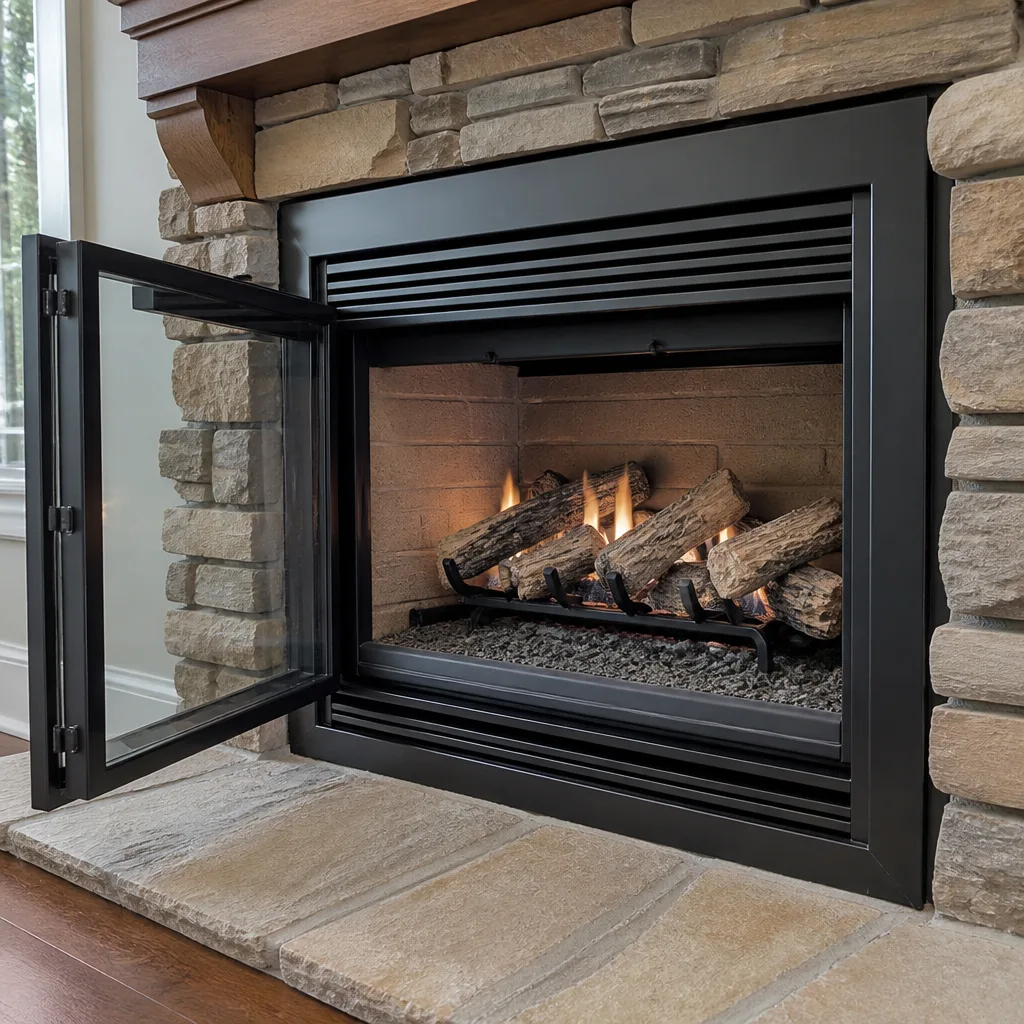
- Any gas appliance vent. A gas-burning insert or appliance shares the flue, and its venting has different requirements than a wood fire. It’s a professional call, not a visual check.
- Post-chimney-fire evaluation. After any suspected chimney fire, the system needs a full inspection before it’s used again, even if nothing looks wrong from the hearth.
If you’re not sure which of these applies, the safest move is an inspection. That’s the whole point of an inspection-first approach: diagnose first, recommend second. You shouldn’t be sold a liner because someone eyeballed your firebox.
How to Build a Defensible Maintenance Record
An organized maintenance record saves you money at resale, gives your insurer a clear history, and lets any future technician understand your chimney’s condition without starting from zero. It doesn’t need to be fancy. A folder and a running log is enough.
Log these for every visit and every self-check:
- Date and type. Sweep, inspection (note the level: Level 1, 2, or 3), or repair.
- What was found. The inspection report should name what the technician observed: creosote stage, liner condition, crown condition, cap condition, damper function.
- What was recommended and what was done. Separate “we recommend” from “we completed” so the record is honest about deferred items.
- Photos. Your own from the hearth, and the technician’s camera images if they provide them. Keep both in the same folder with date stamps.
- Materials used. If a liner was resurfaced or a cap replaced, note the brand and the product. HeatShield and DuraFlex records, for example, tell a future inspector exactly what’s been done and to what standard.
- Your burn habits. A one-line note about how much you burned that season and whether you burned well-seasoned wood.
The test for a defensible record: could a new technician, an insurer, and a buyer all read it and understand the chimney’s history without needing to ask you questions? If yes, it’s done. When you rebook, ask for the written inspection summary and photo report; the good companies provide them without needing to be asked.
What Becomes a Disclosure Under Colorado Real Estate Rules
Colorado real estate transactions require sellers to disclose known material defects. That’s the general rule. What matters for your chimney is what the record already shows. If you’ve had an inspection that flagged a cracked crown, a compromised liner, or a damper that no longer seals, and you haven’t repaired it, that finding belongs in the disclosure. The record that protected you during the sale is the same one that, if you don’t act on it, becomes the thing a buyer’s inspector is going to find anyway.
The practical rules:
- Disclose conditions you know about. “I’ve been meaning to get the crown fixed” is still a known condition. Put it in the disclosure and be ready to price it.
- Keep the inspection report on hand. A clean, recent inspection is an asset at sale. A missing one invites the buyer to commission their own, which can surface more than you expected.
- Don’t let deferred repairs sit. A documented repair protects you at sale. A documented recommendation without the repair protects the buyer. The difference is your liability.
- Ask specifically. Disclosure requirements shift, and the exact language applies to your contract. Your real estate professional can tell you what to write on your specific transaction; we’re not real estate attorneys and we won’t pretend to be. What we do is hand you the inspection report and photo record you’ll need to answer the question accurately.
If you’re preparing a Centennial home for sale and your chimney has never had a documented inspection, this is the moment to get one, before the buyer’s inspector has a chance to. Repairs completed in advance are still disclosed, but a repaired system reads very differently from an unresolved recommendation, and you’ll want the paperwork to back that up.
Common Mistakes to Avoid
- Assuming a clean-looking firebox means a clean flue. The firebox is a visual check; the flue is where the creosote and the liner live. A tidy hearth tells you nothing about either one, which is why the annual professional sweep stays on the list even in a year you burned lightly.
- Burning green or “seasoned” but wet wood to save money. Wet wood smolders, lays heavy creosote, and is the most common route to a glazed third-stage buildup that needs chemical treatment. Dry, well-seasoned wood is both cheaper to burn and easier on the flue.
- Treating a stiff damper as normal. A damper that drags or jams is often a sign of rusting from moisture getting in from above. Ignoring it just lets the water source keep working.
- Skipping the spring check. A Centennial fall is when the flue is dirtiest, but a Front Range spring is when freeze-thaw damage is easiest to spot and when water intrusion is most obvious. Spring is not optional for a house with masonry.
- Accepting a repair recommendation with no camera evidence. You should be shown the images and understand what they show before you agree to a liner or masonry job. If a company can’t show you, get a second opinion.
- Letting a flagged item sit unrepaired through a home sale. A documented recommendation you didn’t act on is a disclosure item. A documented repair isn’t. The gap between those two is entirely on the checklist.
- Assuming a gas insert’s vent is maintenance-free. Gas venting has its own requirements and shares the flue system. It’s a professional check, and a visual one from the hearth won’t cover it.
See the difference
 Before
 After
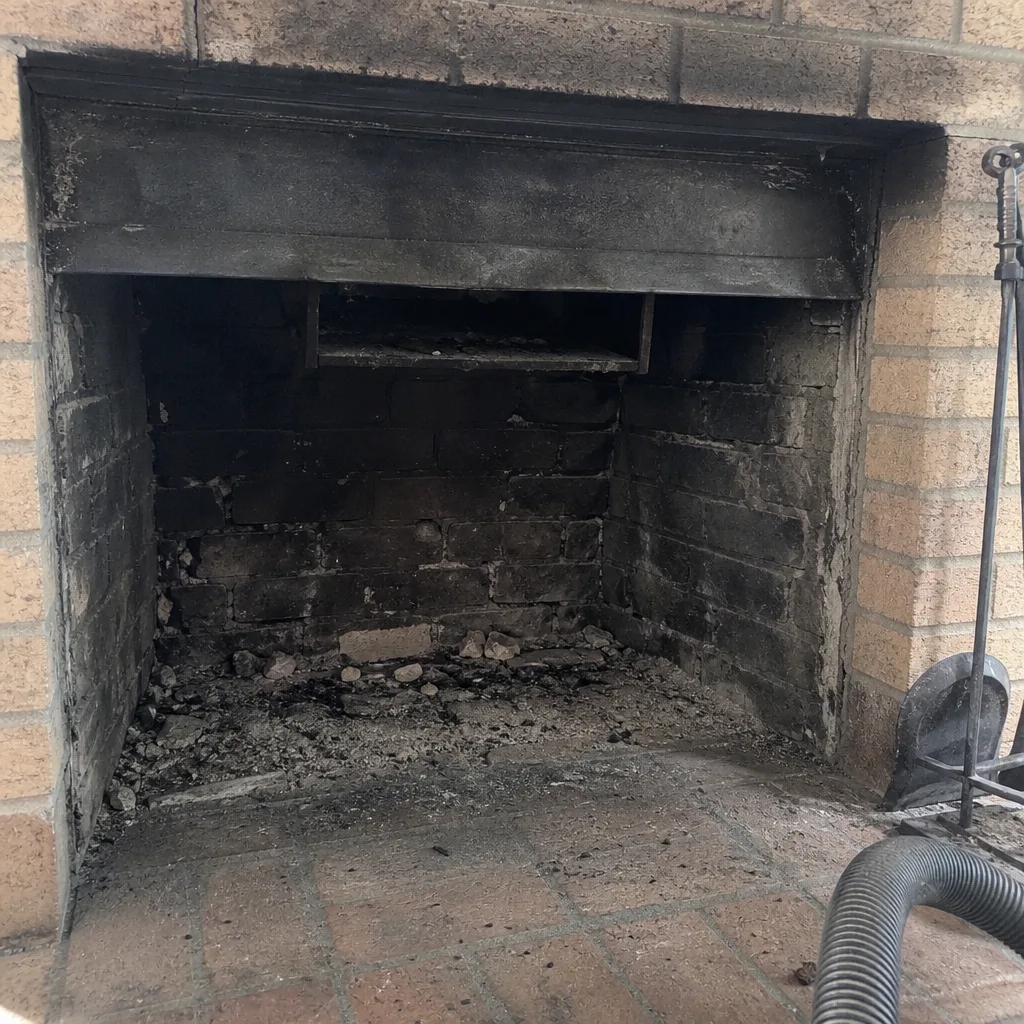 Before
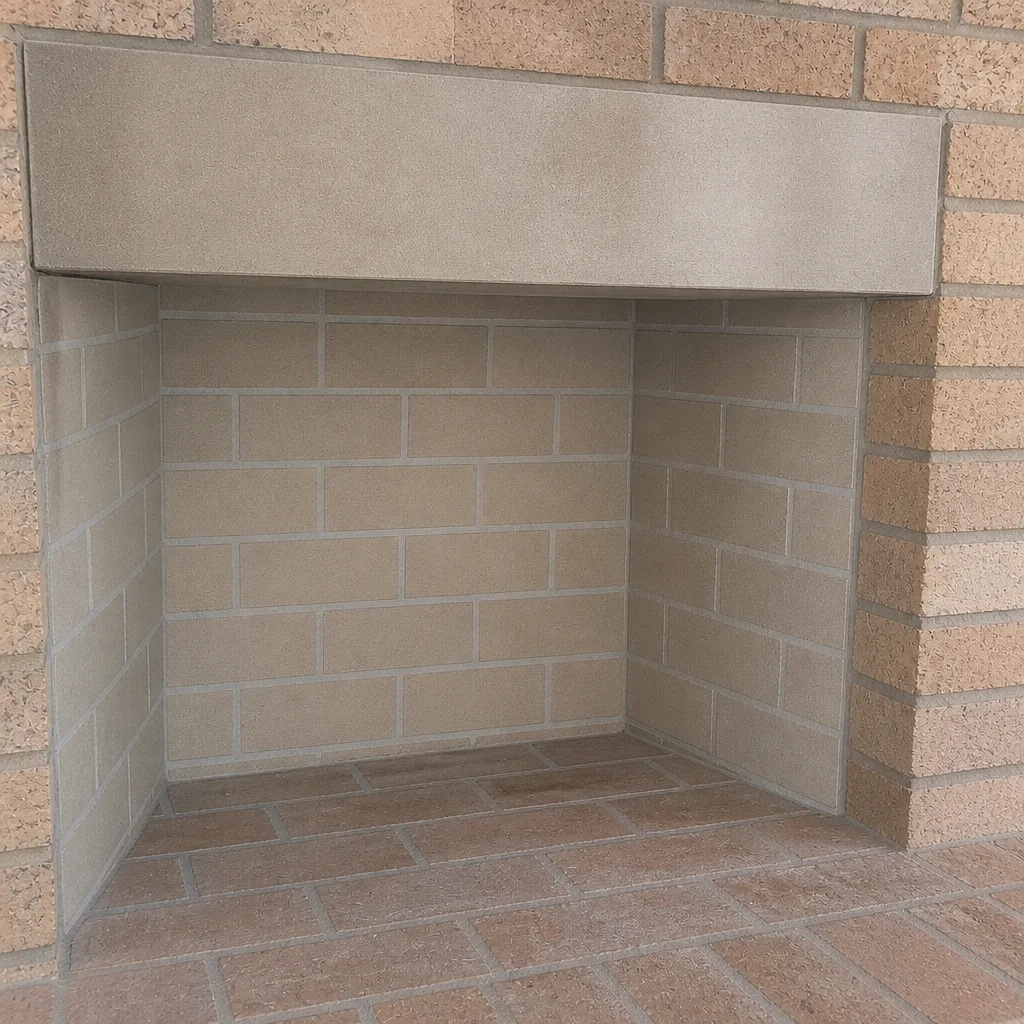 After
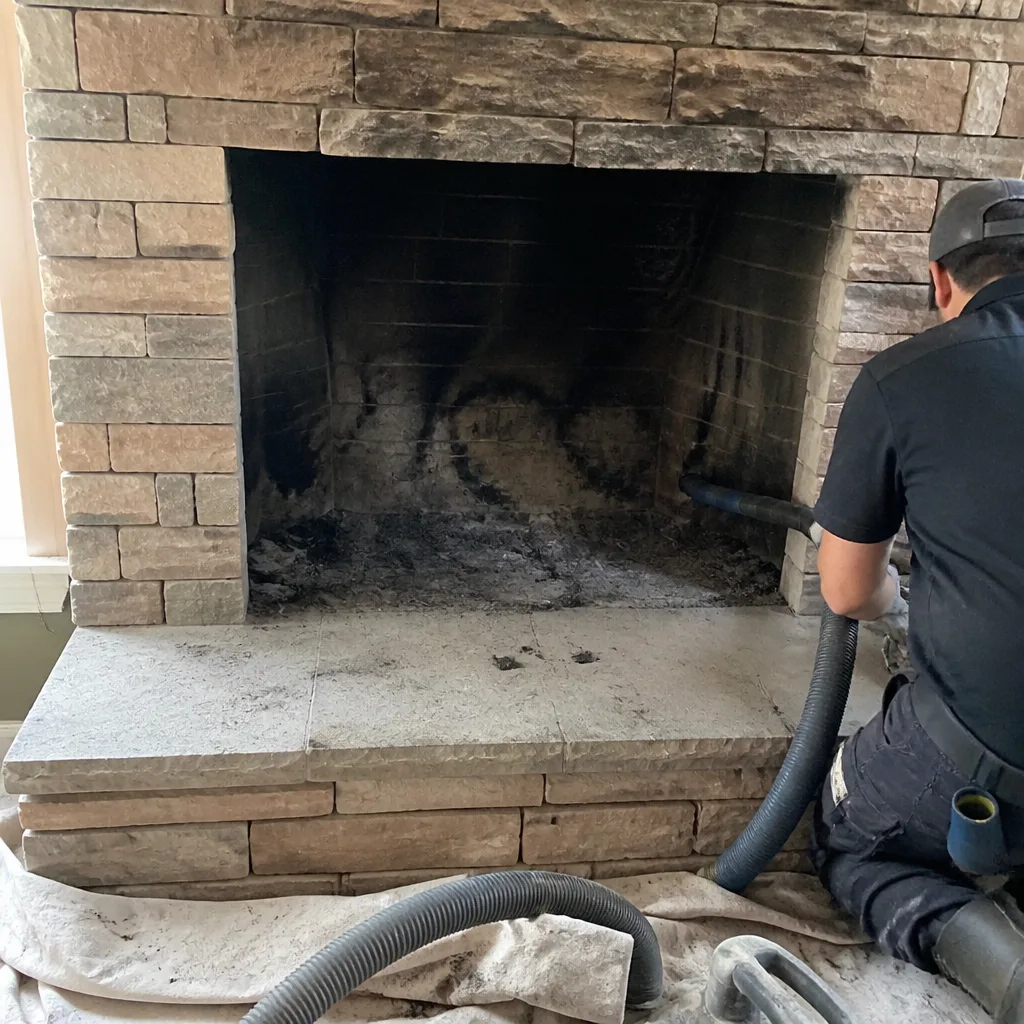 Before
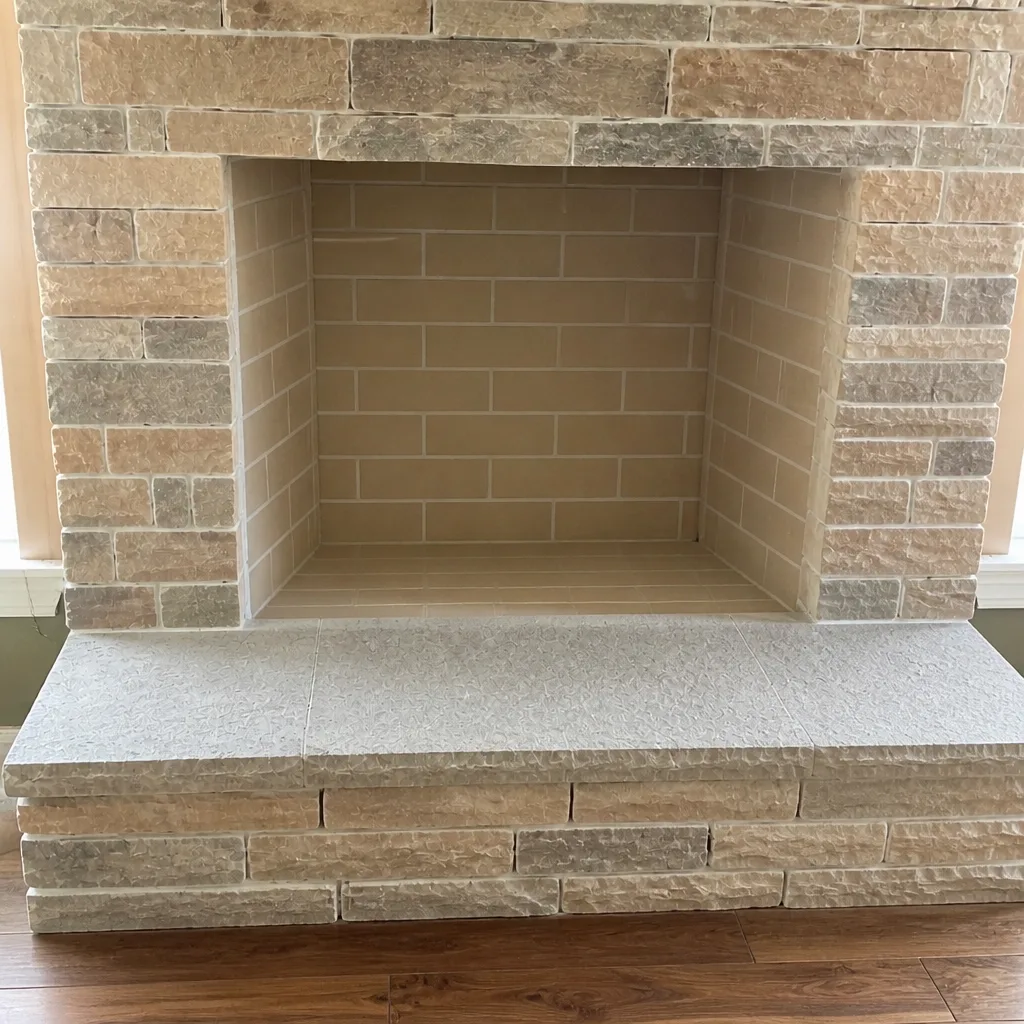 After
When to Call a Professional
Call when your self-check turns up a red flag you can’t fully diagnose: a spalled brick, a displaced crown crack, a leaning cap, water signs inside the chase, a glazed creosote layer, or a damper that’s stuck. Call when you’ve just moved into a Centennial home whose chimney history is unknown, when you’re preparing to sell, or when it’s been more than a season since the last sweep. Call after any suspected chimney fire. And call to schedule the annual sweep and Level 1 inspection before frost arrives, so the season is diagnosed before you burn in it. Chimney Sweep Centennial offers free estimates in Centennial, with the price set per job by a written estimate, and our technicians have up to 13 years of experience. Call (833) 842-2139 to book an inspection or estimate.
Frequently Asked Questions
Once a year for a wood-burning fireplace, or more often if you burn heavily or burn wet wood. In Centennial’s climate, the early fall sweep before the first frost is the sweet spot, with a spring check after the last burn to catch freeze-thaw damage. If a season passes with heavy use or glazed creosote, don’t wait for the annual mark. Call (833) 842-2139 to book a sweep and get an exact quote; estimates are free.
Yes. The flue liner can’t be seen from the hearth with a flashlight, and a cracked or deteriorated liner is the single most common hidden problem in older Centennial homes. Only a professional with a camera can tell you whether the liner is sound, and that’s the whole reason the annual inspection exists. Nothing is recommended without camera evidence you can see. Call (833) 842-2139 for an inspection and an honest read on whether a liner repair can wait.
Creosote builds in layers, and once it reaches the glazed third stage it becomes the fuel that turns a chimney fire from unlikely into possible. Skipping the sweep doesn’t leave a clean flue untouched; it lets a flammable layer accumulate, and it hides developing liner or crown problems you’d otherwise catch early. The annual sweep is also the cheapest way to keep your maintenance record defensible for insurance and resale. Call (833) 842-2139 to get on the calendar before frost.
A sweep is far cheaper than a liner or crown repair, which is why the annual sweep is the single best line item in your chimney budget. The real expense comes from skipping it and paying for structural repair later. Our estimating is per job, and the written estimate sets the final price, with nothing added after. Call (833) 842-2139 for a free estimate; the number is what you’ll budget.
Hairline cracks with no displacement are typically cosmetic; a brick whose face has spalled or any crack wider than a hairline is a professional call. In Centennial’s freeze-thaw climate, a spalled brick is already failing. Photograph it with a scale reference and describe it when you book. Call (833) 842-2139 and we’ll tell you whether a professional needs to see it before the next burn.
Half of it is safe DIY: the visual checks of the firebox, damper, smoke stains, cap from the ground, and water signs are all safe from the hearth with a flashlight and phone. The other half, everything involving the flue interior, the top of the stack, or the liner, is professional work because you can’t see it safely and the components are too easy to damage. Stick to the checklist’s safe half, and let us handle the rest. Call (833) 842-2139 for the professional half.
The Bottom Line
The checklist that keeps a Centennial chimney safe is a decision tree, not a to-do list. Do the homeowner-safe half yourself: firebox, damper, smoke chamber, cap from the ground, water signs, photographed and logged. Leave the liner, the creosote, the crown, the cap repair, and any gas vent work to a professional who can show you the camera images before recommending anything. Time the work to Centennial’s actual calendar: early fall before frost, midwinter after hard freezes, spring after the last burn. Keep a running record, because that record protects you at insurance time and at sale, and it’s the same record that tells a future buyer the chimney has been cared for. Call (833) 842-2139. We answer 24/7. Fast dispatch from 7am to 7pm, Sunday through Friday. We work with professional-grade systems like HeatShield, DuraFlex, Gelco, and Olympia Chimney, and every estimate is free. If you’re in Centennial, start with a sweep and inspection, and you’ll know exactly where you stand for the season ahead. Request a free estimate today at Chimney Sweep Centennial.
Written by the team at Chimney Sweep Centennial.